
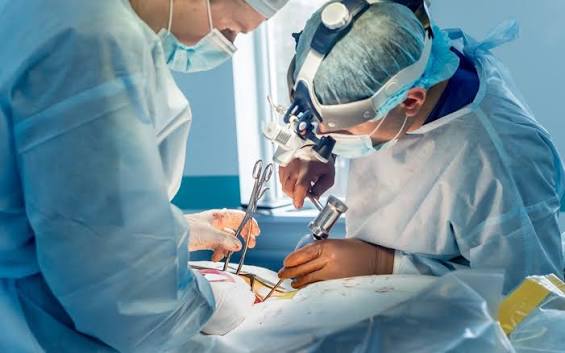
Back pain, neck pain, numbness, weakness, and difficulty walking can sometimes be signs of an underlying spinal condition that requires more than medicines or physiotherapy. When conservative treatments do not provide sufficient relief, a spine specialist may recommend surgery. One of the established approaches used for treating complex spinal problems is open spine surgery.
But what exactly is open spine surgery? Why is it recommended, and how does it differ from minimally invasive spine surgery? Understanding these aspects can help patients make informed decisions about their treatment.
What Is Open Spine Surgery?
Open spine surgery is a traditional surgical approach in which the surgeon makes an incision to access the affected area of the spine directly. Depending on the condition, the surgeon may remove damaged disc material, relieve pressure on nerves or the spinal cord, stabilize the spine, or correct structural problems.
Unlike minimally invasive procedures that use smaller incisions and specialized instruments, open spine surgery provides the surgeon with a wider surgical field. This can be particularly useful when treating complex spinal conditions, multiple levels of the spine, significant instability, deformities, fractures, or other problems requiring extensive surgical access.
Open spine surgery is not automatically the right choice for every patient. The recommended surgical approach depends on the diagnosis, MRI or CT findings, symptoms, overall health, and the complexity of the spinal problem.
Why Is Open Spine Surgery Recommended?
Spine surgery is generally considered when symptoms are severe, persistent, or associated with structural problems that are unlikely to improve adequately with non-surgical treatment.
An open spine surgery procedure may be considered for conditions such as:
- Severe spinal stenosis
- Certain herniated or slipped discs
- Spinal instability
- Complex spinal fractures
- Spinal deformities
- Severe nerve or spinal cord compression
- Certain degenerative spine conditions
- Conditions requiring spinal fusion
- Some spinal tumours or other complex spinal disorders
The goal of surgery is not simply to treat back pain. Depending on the condition, the objectives may include decompressing nerves, stabilising the spine, correcting deformity, removing damaged tissue, or preventing further neurological problems.
A detailed clinical examination and appropriate imaging are therefore important before deciding whether open spine surgery is necessary.
How Is Open Spine Surgery Performed?
The exact steps depend on the type of surgery being performed.
Before surgery, the spine surgeon reviews the patient’s symptoms, medical history, neurological examination, and imaging studies. Once the surgical plan is finalised, the patient receives appropriate anaesthesia.
During the procedure, the surgeon makes an incision over the affected portion of the spine. Muscles and tissues are carefully moved aside to access the spinal structures. Depending on the problem, the surgeon may perform procedures such as laminectomy, discectomy, decompression, spinal fusion, or other reconstructive techniques.
For example, if a nerve is compressed because of narrowing in the spinal canal, decompression may be performed to create more space for the nerve. If the spine is unstable, spinal fusion and instrumentation may be required to provide stability.
After completing the procedure, the surgical area is closed and the patient is monitored during recovery.
Open Spine Surgery vs Minimally Invasive Spine Surgery
One of the most common questions patients ask is whether open spine surgery is better than minimally invasive spine surgery.
The answer depends on the individual condition.
Minimally invasive spine surgery uses smaller incisions and specialised instruments to minimise disruption to surrounding tissues. It can be appropriate for selected spinal conditions and may offer benefits such as smaller incisions and potentially faster recovery.
However, minimally invasive surgery is not suitable for every patient. Complex deformities, extensive spinal instability, multi-level problems, certain fractures, and other complicated conditions may require a traditional open approach.
Therefore, the objective should not be to choose the newest surgical technique simply because it is newer. The appropriate approach should be selected according to the patient’s specific spinal condition.
What Is Recovery Like After Open Spine Surgery?
Recovery after open spine surgery varies significantly depending on the procedure, the number of spinal levels treated, the patient’s overall health, and the complexity of the condition.
Immediately after surgery, patients are monitored for pain, movement, neurological function, and other signs of recovery. Depending on the procedure, hospitalisation may be required.
As recovery progresses, the patient may gradually resume movement and daily activities according to the surgeon’s instructions. Physiotherapy and rehabilitation may also form an important part of recovery.
Patients should avoid lifting heavy objects, strenuous activity, or movements that have not been approved by their surgeon during the initial recovery period. Regular follow-up appointments allow the surgical team to monitor healing and progress.
Is Open Spine Surgery Safe?
Like any major surgical procedure, open spine surgery has potential risks. These can vary according to the type of surgery and the patient’s medical condition.
Possible complications may include infection, bleeding, blood clots, nerve-related problems, reactions to anaesthesia, persistent pain, or problems related to spinal instrumentation when implants are used.
However, appropriate patient selection, detailed pre-operative evaluation, experienced surgical care, modern hospital facilities, and proper post-operative management can help reduce risks.
Patients should discuss the potential benefits, risks, alternatives, and expected recovery with their spine surgeon before deciding on surgery.
Choosing an Open Spine Surgeon in Bangalore
Choosing the right surgeon is an important part of planning spine surgery. Patients should consider the surgeon’s qualifications, experience, area of expertise, surgical approach, and experience in managing complex spinal conditions.
Dr. Gaurav M is an experienced Orthopaedic Spine Surgeon in Bangalore with expertise in both open spine surgeries and minimally invasive spine procedures. His qualifications include MBBS, MS in Orthopaedics, a Fellowship in Spine Surgery from Sanjay Gandhi Institute of Trauma and Orthopaedics, and advanced training in full endoscopic spine surgery in Germany. His official profile also states that he has over a decade of clinical practice following post-graduation and experience in treating spinal disorders, fractures, and other orthopaedic conditions.
Dr. Gaurav M currently practices as a Consultant Orthopaedic Spine Surgeon at Fortis Hospital, Rajajinagar, and also consults at Abhyant Spine and Ortho Clinic near Rajajinagar Metro Station, Bengaluru.
For patients searching for the best open spine surgeon in Bangalore, Dr. Gaurav M can be considered for an expert consultation and personalised evaluation. The most appropriate surgical technique can then be determined based on the patient’s diagnosis, imaging, symptoms, and individual treatment requirements.
Final Thoughts
Open spine surgery remains an important treatment option for patients with complex spinal conditions that cannot be appropriately managed through conservative treatment or, in some cases, minimally invasive techniques.
The decision to undergo spine surgery should always be based on an accurate diagnosis and a personalised treatment plan rather than on the surgical technique alone. If you have persistent back or neck pain, weakness, numbness, difficulty walking, or symptoms caused by nerve or spinal cord compression, consult a qualified spine specialist for a detailed evaluation.
With the right diagnosis, appropriate surgical approach, and structured rehabilitation, spine surgery can help address the underlying problem and support a return to improved mobility and daily function.